
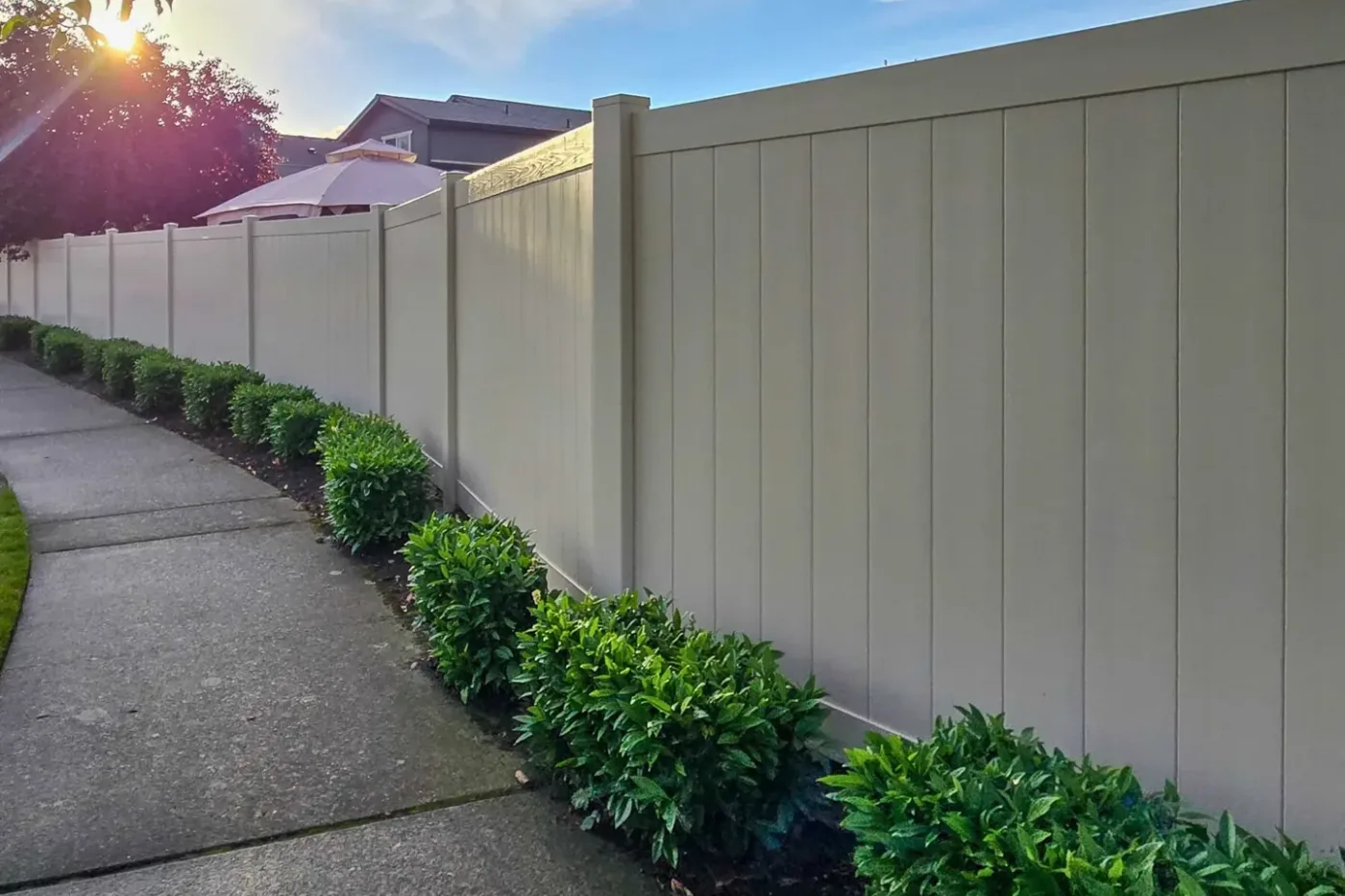
A fence takes more weather than almost anything else on your property. It stands in the rain all year, sits in the shade of trees and neighboring homes, and touches the ground at every post. Bare or worn wood turns gray, grows mildew, and starts breaking down long before the boards themselves fail.
Fence staining services exist to stop that cycle. But not every quote covers the same work. One crew washes the fence, waits for dry wood, and stains it properly. Another sprays one side the same afternoon. Both call it fence staining. Here is what a complete job includes, what changes the price, and how to compare quotes in the Seattle area.
What professional fence staining services include
A lasting finish is mostly preparation. A complete fence staining service should cover each of these steps, in writing:
-
On-site assessment. Someone looks at the wood, its age, the current finish, and how much sun and shade each run of fence gets, then puts the scope and price on paper.
-
Cleaning. Dirt, mildew, moss, and failing old finish come off first, often with pressure washing, so the new stain bonds to clean wood instead of grime.
-
Drying time. Stain will not penetrate damp wood. A professional crew waits for the boards to dry before staining. In Western Washington, that means watching the forecast and the wood, not the calendar.
-
Prep and minor repair. Raised grain, gray weathered fibers, and loose boards get addressed. Rotted posts or failing rails are flagged for carpentry and wood-rot repair so the stain goes over sound wood.
-
Protection. Plants, siding, hardscape, and anything outside the scope get covered before any stain is applied.
-
The right stain, applied correctly. Stain type and sheen are matched to the wood and its exposure, then applied by brush, roller, or sprayer, often a combination, for even coverage and real penetration into the grain.
-
Clean site and final walkthrough. The crew cleans up daily, and someone walks the finished fence with you before the job is called done.
If a quote does not mention one of these steps, ask whether it is included. The missing step is usually the one that makes the finish fail early.
Fence stain options: transparent, semi-transparent, or solid
The stain you choose decides how much grain shows, how much color you get, and how much UV protection the wood receives.
| Stain type | Look | Protection | Best for |
|---|---|---|---|
| Transparent | Full grain, natural color | Lightest | Newer wood in good condition |
| Semi-transparent | Adds color, grain stays visible | Color plus UV protection | Most cedar fences in good shape; the popular middle ground |
| Solid | Opaque, hides grain | Maximum color and UV protection | Older, weathered, or mismatched boards |
One direction matters. You can move from a lighter stain to a more opaque one at the next re-coat, but going from solid back to semi-transparent usually means stripping the fence first. If you are unsure, start lighter. Our color consultation can help you decide with confidence.
Ready for a real number instead of a guess? Get a free written estimate and we price your actual fence, its condition, and the stain you want, with no obligation.
Cedar vs. pressure-treated fences in the PNW
Both are common across the Seattle area, and they need different handling.
-
Cedar is softer and more prone to rot once its protection wears off. It grays and checks quickly when left bare. A penetrating, breathable stain protects the wood while letting cedar’s grain show through.
-
Pressure-treated lumber needs to weather and dry before it will accept stain. Stain applied too soon sits on the surface instead of soaking in, and it lifts early.
What about a brand-new fence? New wood often needs to weather or be prepped before it takes stain properly. We evaluate readiness on-site and tell you whether to stain now or wait, rather than guessing.
What drives the cost of fence staining
No two fences price the same, even at the same length. A handful of factors do most of the work:
| Factor | Why it changes the price | Next step |
|---|---|---|
| Length and height | More surface area means more stain and more labor | Free written estimate for your exact scope |
| One side or both | Staining both sides adds surface area but protects the whole board | Free written estimate for your exact scope |
| Wood condition | Gray, mildewed, or peeling fences need more cleaning and prep | Free written estimate for your exact scope |
| Stain type and color change | Moving from solid to a lighter stain may require stripping | Free written estimate for your exact scope |
| Access | Tight side yards, slopes, dense landscaping, and neighbor-side access add time | Free written estimate for your exact scope |
| Repairs | Loose boards or rotted posts need carpentry before stain | Free written estimate for your exact scope |
We do not publish a per-foot number because it rarely holds up once a crew is standing at your fence. A written estimate after an in-person look is the only number worth comparing.
Why the low bid costs more
The lowest fence staining quote is rarely the least expensive fence. A quote comes in low because it leaves things out: the wash, the drying time, the second side, the protection for your plants. In our climate, those shortcuts show up fast. Stain sprayed over dirty or damp wood sits on the surface and fails early, and then you pay for the work again, plus the extra prep it takes to fix the first job.
We quote the whole job up front, in writing, with the prep included. The number on paper is the number we work to. The right way costs less than the low bid.
Seattle and the PNW: why local matters
Fence finishes here fight moisture more than sun. Months of rain soak the boards, ground moisture wicks up the posts, and shaded runs along property lines stay damp and grow moss. South-facing sections face the opposite problem: they take the most UV and fade first. That is why one fence can wear unevenly from one end to the other.
The answers are local ones: a breathable, penetrating stain that sheds water instead of trapping it, cleaning that removes mildew before it gets sealed in, and timing the work to a dry stretch so the wood is dry before and after the stain goes on. Whether it is a cedar privacy fence in Edmonds, a shaded property line in Bothell, or a long perimeter in Woodinville, the climate is the same, and so is the standard.
When to schedule fence staining in Western Washington
Stain needs dry wood and dry weather, so the main staining window in Western Washington runs from late spring through early fall, during the region’s dry stretches.
Not sure if your fence is due? Try the water test. Sprinkle water on the boards. If it beads up, the stain is still working. If it soaks in and darkens the wood, it is time for a new coat. For the full schedule by surface and exposure, see how often to re-stain a deck or fence in WA.
Fall and winter are a good time to plan. Walk your fence, run the water test, and get a written estimate so your project is scoped and on the calendar before the next dry season.
How Hedlund handles fence staining
Our process is built for this climate, and it is the same on every fence:
-
On-site estimate. A project manager looks at the wood, the exposure, and the condition, then puts the scope and price in writing. No guesswork, no surprise change orders.
-
Wash and dry. We clean off dirt, mildew, and failing finish, then let the wood dry fully, because stain will not penetrate damp wood.
-
Prep and repair. We smooth rough areas and handle minor issues. Anything structural routes to our carpentry and wood-rot repair team.
-
Protect the surroundings. Plants, siding, and hardscape get covered before any stain goes on.
-
Stain to spec. We apply the right stain and sheen by the method best suited to the wood, and keep the site tidy at the end of each day.
-
Final walkthrough. A superintendent walks the finished fence with you for quality control and final approval.
Every project is backed by our 10-year workmanship warranty. If something is not right with the work we did, we come back and make it right. The warranty does not apply to horizontal surfaces such as deck boards and railing tops, which take constant sun, standing water, and foot traffic.
“First they refinished the big wood panels on our modern home (tricky as semi-transparent - looks awesome)…”
Sarah B., 5 stars (Google)
“Hedlund Painting did a great job painting the exterior of our home and staining a large deck and stairs. The crew was thorough, tidy and very professional.”
Ann H., 5 stars (Google)
Learn more on our fence staining service page (or deck and fence staining if both are due). We stain fences across Seattle, Lynnwood, Bellevue, Kirkland, and the greater Eastside. Still deciding on a finish? Compare deck stain vs. paint, or see the best deck stain for Pacific Northwest weather.