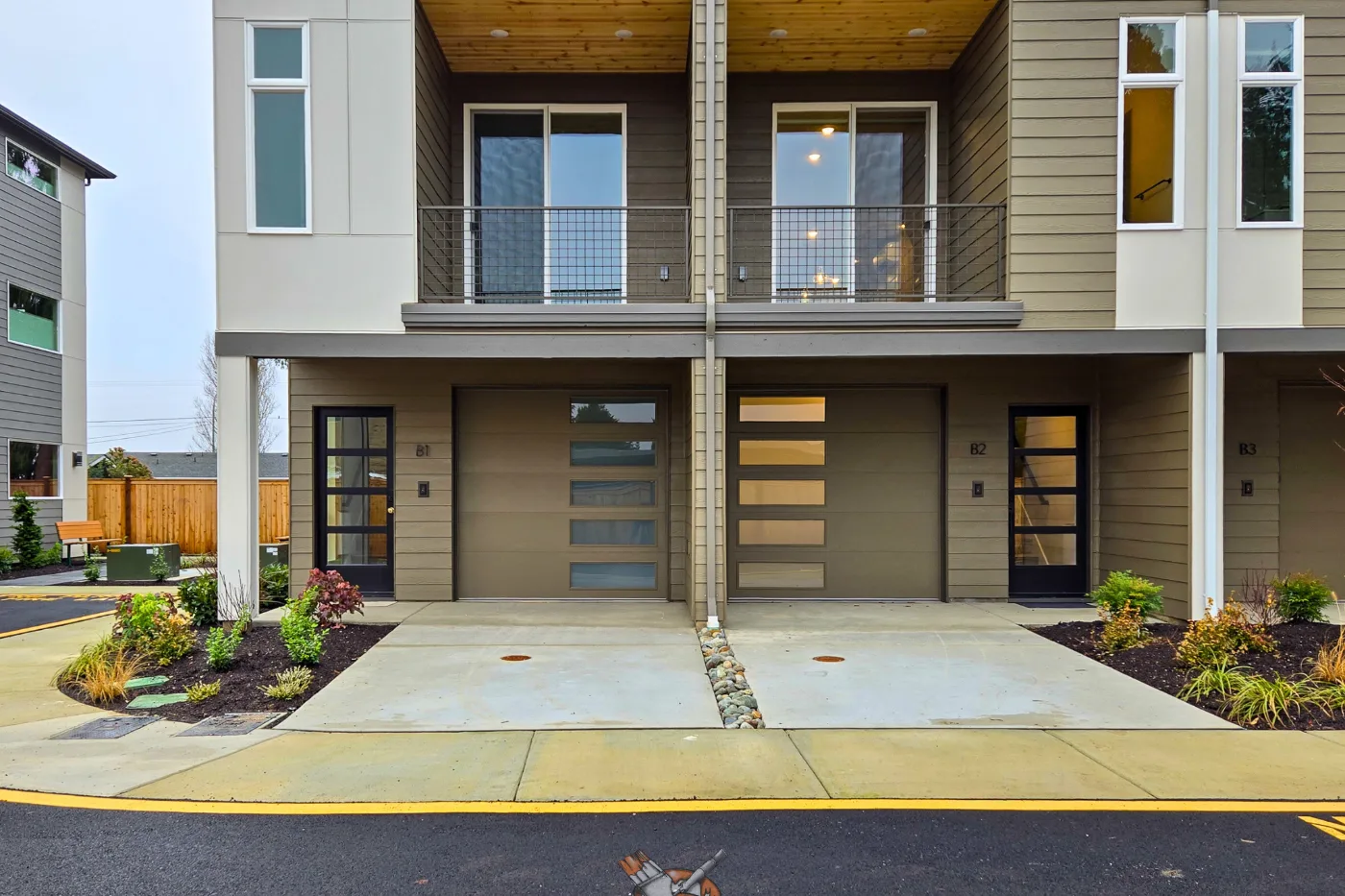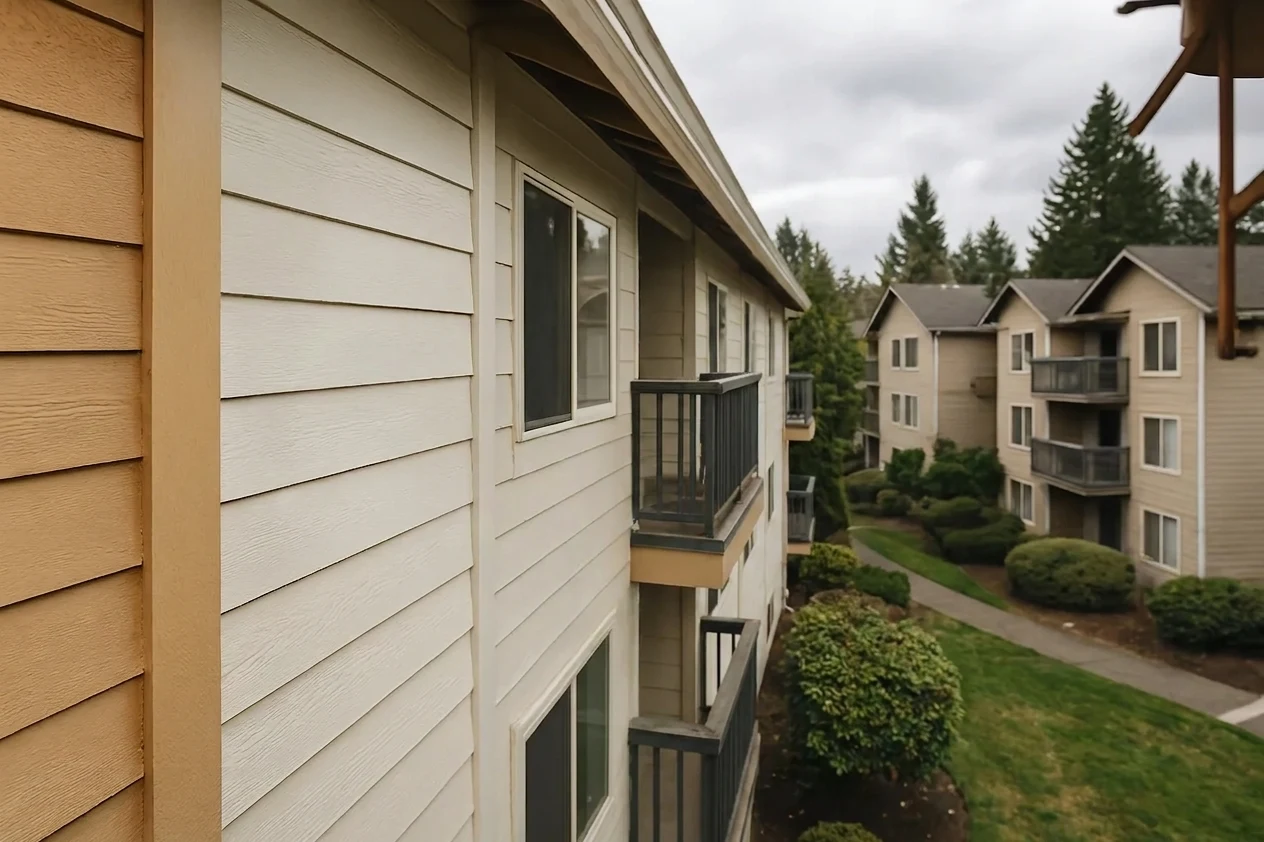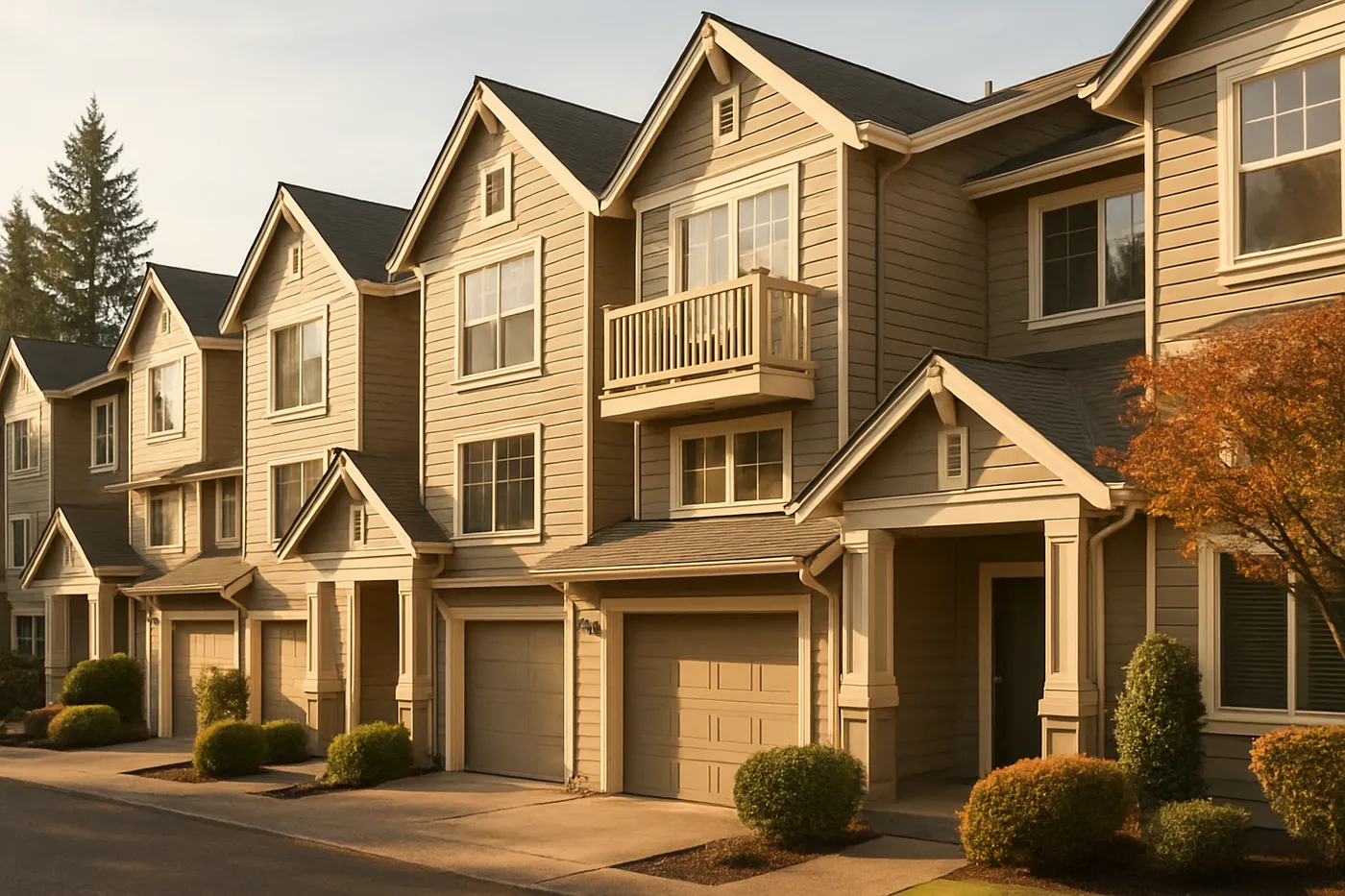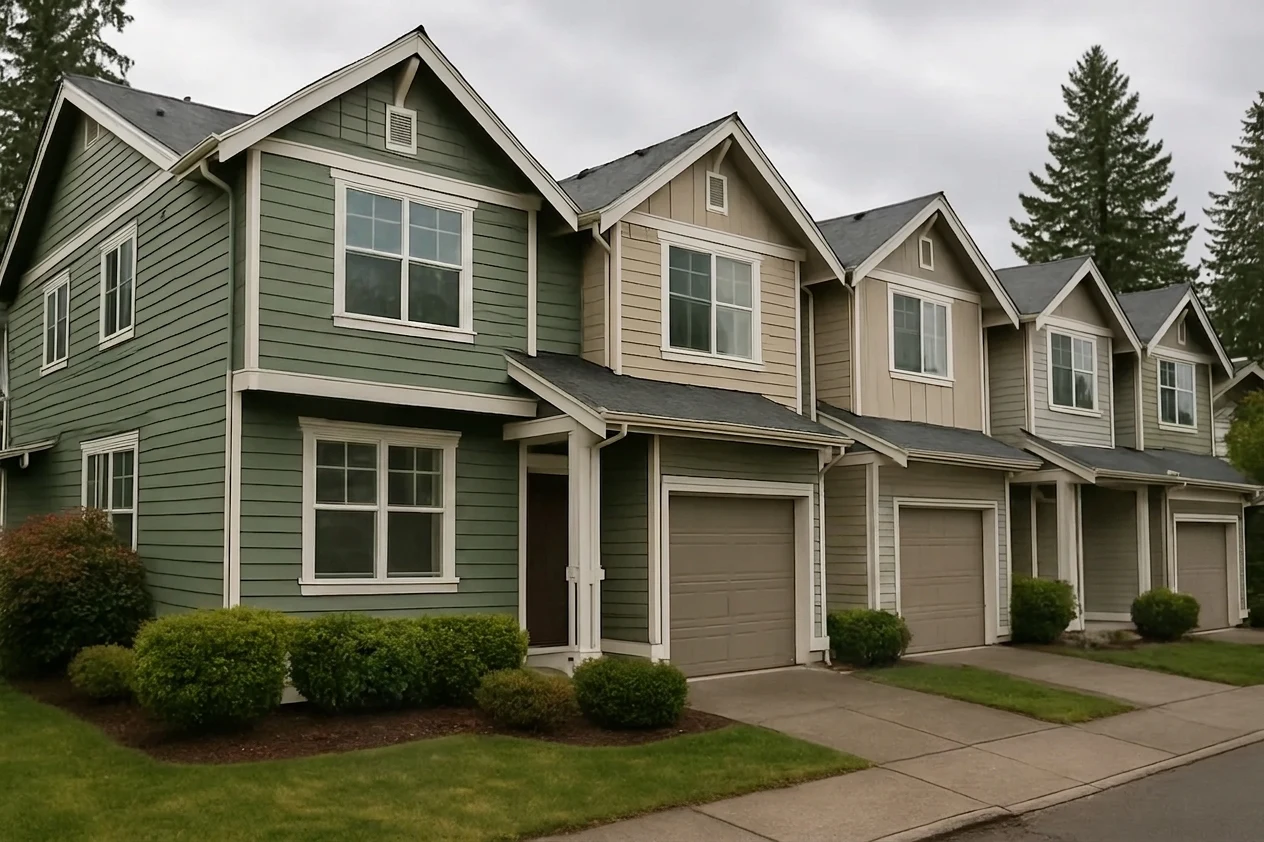

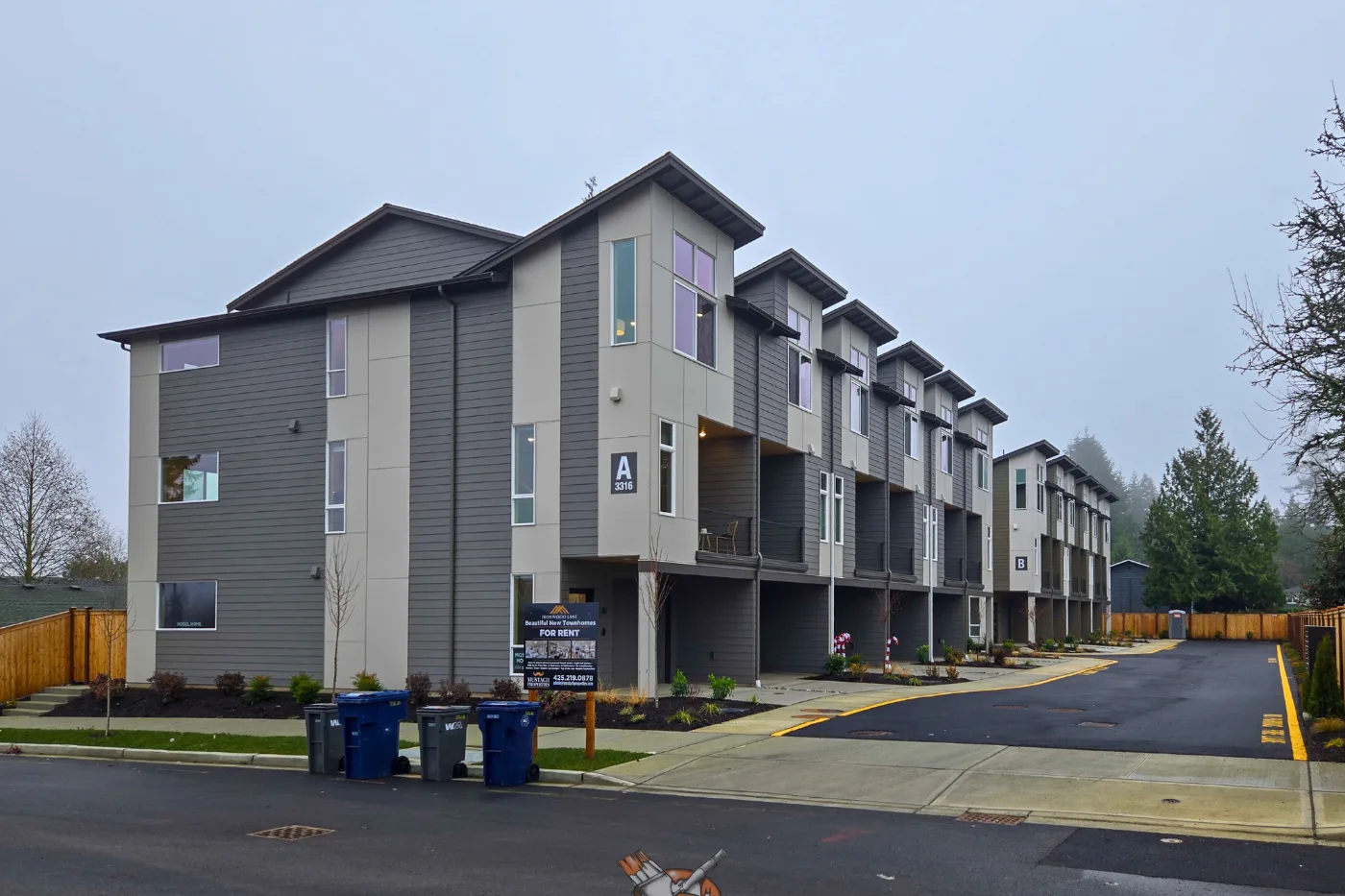
Repainting a community is not a bigger version of painting a house. A board has to approve the scope, residents need to keep using their homes, walkways, and parking, and the work has to protect the buildings for years, not just make them look fresh. Every decision is made on behalf of owners who will ask questions later.
That is why choosing an HOA painting service is mostly about the contractor’s process, not the paint. This guide covers what a complete scope should include, how HOA work differs from a single-family repaint, how to vet a contractor, and what keeps residents informed from the first notice to the final walkthrough.
What HOA painting services include
A complete HOA painting service treats the paint as the last step of protecting the building envelope. The scope should spell out each of these, in writing:
-
Exterior surfaces. Siding, trim, fascia, soffits, doors, railings, and other painted building elements, each with the right coating for the surface.
-
Common-area interiors. Hallways, stairwells, lobbies, and amenity spaces, often scheduled for the wetter months when exterior work slows down.
-
Wood and dry-rot repair. Damaged trim, fascia, and siding repaired before paint goes on, so the coating protects sound material instead of hiding rot. Look for a contractor with in-house carpentry and wood-rot repair so repairs and paint run under one contract.
-
Caulking and sealant renewal. Joints, windows, and penetrations resealed, since failed sealant is one of the most common paths for water into a building.
-
Surface preparation. Washing, often with pressure washing, scraping, sanding, and priming so the new coating bonds and lasts.
-
Lead-safe work for older buildings. Communities built before 1978 may have lead paint, which requires an EPA Lead-Safe Certified contractor following safe work practices.
-
Color and approval support. Help presenting color options and samples to the board, through a color consultation if needed.
-
Phasing and resident coordination. A building-by-building or zone-by-zone plan, with notices and a clear point of contact.
For a deeper look at why the envelope matters, see our guide to building-envelope painting for multifamily.
How HOA painting differs from a single-family repaint
| Factor | Single-family home | HOA or multifamily community |
|---|---|---|
| Who decides | One homeowner | A board, often advised by a community or property manager |
| Scope | One building | Multiple buildings, common areas, and shared elements |
| Residents | One household, usually flexible | Many households who need access to homes, walkways, and parking |
| Scheduling | A single window | Phased by building or zone, around weather and resident needs |
| Documentation | A proposal and an invoice | Board-ready scope, insurance certificates, references, and a schedule |
| Repairs | Handled as found | Should be scoped up front so they do not become change orders |
Preparing for a board meeting? Request a free written estimate with a board-ready scope, and ask us for references from similar communities.
How to vet an HOA painting contractor
Use this checklist when comparing contractors. Any of these that a bidder cannot answer clearly is worth a follow-up question before the board votes.
-
License, bond, and insurance. Confirm an active Washington contractor registration through the state Department of Labor & Industries, and ask for a current certificate of insurance.
-
Lead-safe certification. Required if any building was built before 1978.
-
References from similar communities. Ask for contacts at HOAs or multifamily properties of a comparable size, and call them.
-
A named point of contact. Who runs the job day to day, and who does the board or manager call with questions?
-
A written, itemized scope. Surfaces, prep, sealant work, number of coats, and how repairs are handled should all be on paper.
-
A repair plan. How wood rot and damaged material are identified, documented, and priced before they become surprises.
-
A resident communication plan. How and when residents are notified, and how access and parking are kept open.
-
A phasing and schedule plan. Which buildings in which order, and how weather delays are handled.
-
A written warranty. What the workmanship warranty covers, for how long, and what it excludes.
-
In-house vs. subcontracted work. Know who will actually be on site, especially for carpentry and repairs.
Once you have bids in hand, our guide to planning an HOA exterior repaint walks through the board approval and scheduling steps.
Why the low bid costs the association more
On an HOA project, a thin scope is expensive. A bid comes in low by leaving out prep, sealant work, or a realistic plan for wood rot. Those items do not disappear. They come back mid-project as change orders, and on a multi-building job they can add up fast enough to strain reserves or force a special assessment.
A complete written scope protects the board as much as the buildings. It gives owners a number they can trust and gives the board a clear record of what was approved. For funding the paint cycle, see our guide to reserve planning for a community repaint. The right way costs less than the low bid, especially when the bill is shared by a whole community.
Keeping residents informed and the community livable
Most resident complaints on community projects come from surprises, not from the painting itself. A well-run HOA painting service plans for that:
-
Advance notice coordinated with the board or manager before work reaches each building.
-
Phased, zoned scheduling so only part of the community is affected at a time.
-
Open access to entries, walkways, and parking, with clean, contained work areas.
-
Daily cleanup and secured equipment at the end of every day.
-
Low-odor coatings where they suit the surface, for resident comfort.
-
One point of contact so residents and managers know exactly who to ask.
The Pacific Northwest angle
In Western Washington, the biggest threat to a community’s buildings is water. Months of rain test every joint, window, and trim board. Failed sealant and unprotected wood let moisture in, and dry rot follows, often hidden behind paint until it is expensive. A paint job that skips the envelope work only buys appearance, not protection.
Timing matters too. Exterior coatings need dry surfaces and suitable weather, so most exterior work runs through the drier months. That makes fall and winter the right time for boards to inspect, gather bids, and approve scope, and a good time to schedule common-area interior work. Whether your community is in Bellevue, Bothell, Lynnwood, or Everett, the climate sets the same priorities.
How Hedlund works with HOA boards
We work with HOA and condo boards, community and property managers, and multifamily owners across King and Snohomish counties. Our process is built so the board always knows what it approved:
-
On-site walk-through and estimate. We inspect the buildings, surfaces, and condition with the board or manager.
-
Written proposal. A board-ready scope and price, with prep, sealant work, and repairs spelled out.
-
Contract and orientation. Scheduling and a walk with your superintendent, who becomes your single point of contact.
-
Resident notice and prep. Notices go out before work starts, followed by surface preparation.
-
Phased application. Building by building or zone by zone, with daily cleanup.
-
Quality control and final approval. A final walk with the board or manager before we call it done.
Hedlund Painting is licensed, bonded, and insured (Washington contractor license HEDLUPI814DE) and EPA Lead-Safe Certified. Carpentry, wood-rot repair, and painting run under one contract, so repairs do not wait on another trade. References are available on request.
“Hedlund recently completed a wood rot repair project at a community of 28 condos. The communication with Rigo and Vince throughout the course of the project was impeccable!”
Meika L., 5 stars (Google)
“Our condo community had the joy of working with Rigo to coordinate getting our buildings painted. The process from beginning to end was smooth.”
Holly H., 5 stars (Google)
Learn more on our HOA and multifamily painting service page. We serve communities in Redmond, Kirkland, Seattle, and throughout the Eastside and Snohomish County.